
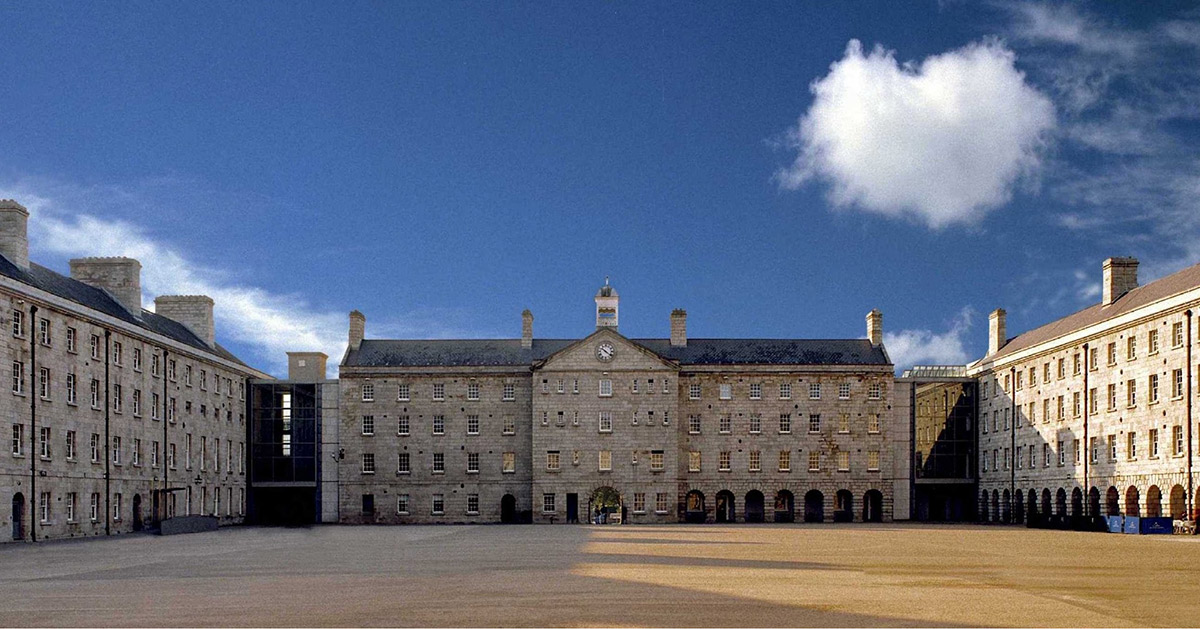

National Museum of Ireland
There are four National Museums of Ireland. Three of them are in Dublin and the fourth, National Museum of Ireland – Country Life, is in County Mayo. Each museum site specialises in a particular area of culture and science. The National Museum of Ireland – Country Life explores traditional ways of life in Ireland through trades, hunting, crafts and farming, as well as fishing, domestic life and festivals.
The National Museum of Ireland – Country Life can be found in Turlough Park, in county Mayo. Admission to the museum is free and there’s a shop and cafe on site for visitors.
What to see
With exhibitions spread over four floors, see how the people of rural Ireland lived in the hundred years between the Great Famine and the end of the 1950s. The award-winning Museum of Country Life is home to the National Folklife Collection. Interactive displays and screens, actual video footage of traditions we are fast losing are featured alongside handcrafted harvest knots, wickerwork, spinning wheels and boats. There’s also videos about the clothing, artefacts from the islands and hand operated machinery our grandparents used.
Level A: Introduction
The entrance level (Level A) in the modern Museum Galleries gives an introduction to the National Museum’s Folklife Collection and to the main themes of the other galleries. It includes the traditional costume of the Aran Islanders, folklore objects, and black and white photographs depicting the Reality of people working close to the land and sea.
Level B: Crafts and the Environment
On Level B, visitors can explore the way of life in rural Ireland that was influenced by the Natural Environment and its resources.
Visitors can also learn about The Times in which the ordinary people lived, during events such as the Land War and the 1916 Rising. The major historical events and occurrences throughout Ireland during the period from 1850 to 1950 certainly had an impact on the lives of ordinary people living in rural locations, particularly their relationship with the land. These events were often depicted in the materials that they possessed.
Level C: Crafts and the Community
The Crafts and the Community exhibition on Level C focuses on the objects relating to the various skills practiced in rural Ireland between 1850 and 1950. It displays the methods, tools, and produce of trades in the community including the blacksmith, carpenter, thatcher, and cobbler. There is also a section on spinning and weaving. There is a large variety of objects and tools on display that were used for working on the land and water, such farming, fishing and for activities in the home. These types of everyday things brings you, the visitor, closer to the experiences of our Irish ancestors.
A section on this level is also devoted to many of the traditions, customs, and festivals that happen (or used to happen) throughout the calendar year.
Level D: Temporary Gallery
This is a space dedicated to temporary exhibitions.
Around the Turlough Park Estate
As well as the Museum Galleries, visitors can also explore Turlough Park House and Turlough Park Gardens & Grounds.
360° Exhibition Images
To give you an insider’s view of the National Museum of Ireland – Country Life, we’ve created 360° images of some of the permanent exhibitions and grounds. To view these images click here and you’ll be able to view current exhibitions as well as the grounds.
Draw in the museum
We welcome our visitors to draw in the museum. For your comfort, stools are available to borrow. Simply contact the reception desk. Please first read our guidelines for drawing and sketching in the museum.
Other museums
National Museum of Ireland – Archaeology
National Museum of Ireland – Decorative Arts & History
National Museum of Ireland – Natural History
Information and images sourced from National Museum of Ireland.